 Image 1 of 1
GHK-CU
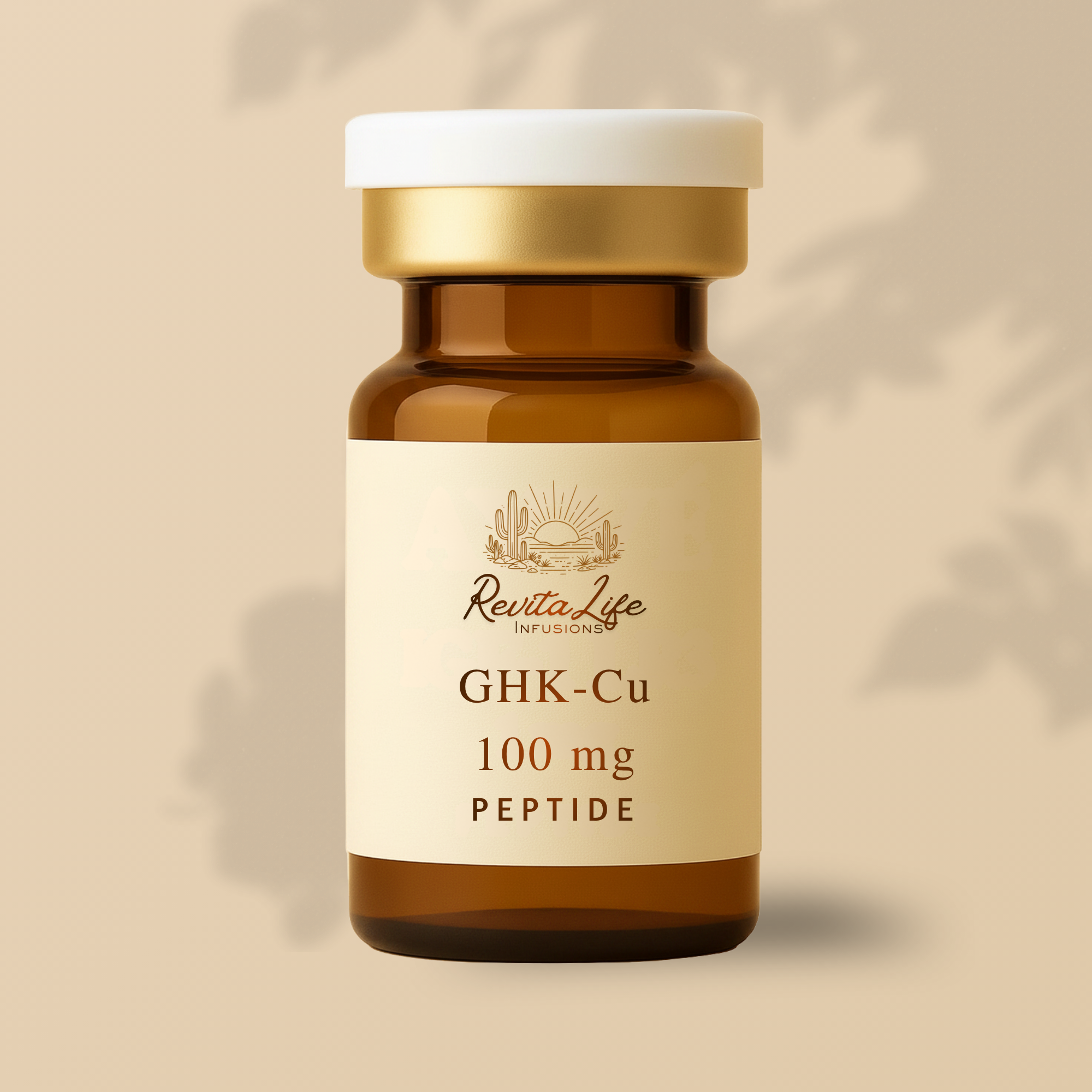
GHK-Cu (Copper Peptide) – Research Grade
For Research Use Only – Not for Human or Veterinary Use
What is GHK-Cu Peptide?
GHK-Cu, a tripeptide complex naturally found in the human plasma, is composed of glycine, histidine, and lysine bonded with copper. This peptide is integral to skin health and repair, as it stimulates collagen production, enhancing skin elasticity and firmness (1).
Its anti-inflammatory properties aid in reducing skin irritation and promote faster wound healing. Moreover, GHK-Cu supports hair growth by revitalizing hair follicles, making it beneficial in treating hair thinning (1).
Widely utilized in cosmetic and therapeutic applications, GHK-Cu is valued for its anti-aging benefits, offering comprehensive skin rejuvenation and contributing to healthier, more youthful-looking skin.
Molecular Formula: C14H24N6O4
Sequence: H-Gly-His-Lys-OH
Molecular Weight: 340.38 g/mol
Summary of GHK-Cu Benefits:
During clinical studies, GHK-Cu demonstrate the following potential benefits:
- Enhances collagen production, which can enhance skin elasticity and firmness (2).
- Promotes wound healing of various soft tissues (1).
- Decreases inflammation of skin, which can reduce redness and inflamed skin (3).
- Reduces the signs of ageing by improving skin elasticity and firmness (4).
- Supports hair growth (1).
- Protects against oxidative stress (5).
- Potential treatment for neurological diseases and cognitive impairment (6).
GHK-Cu FAQs
What products is GHK-Cu found in?
The GHK-Cu peptide is found in many hair care, skin care products and dietary supplements. The copper peptide serum is commonly found in eye cream, face serum, moisturisers, vitamin C cream and some formulations containing hyaluronic acid. It is important to check the ingredient lists of products or check with a pharmacist.
What effects on the skin do GHK-Cu peptide products have?
As discussed above, GHK-Cu is extensively studied for its anti-ageing effects on the skin. It has been found to improve skin density, thickness, reduce the depth of wrinkles and fine lines, particularly around the eye area, reduce large pores, and improve elasticity. Furthermore, GHK-Cu may reduce the appearance of lesions and acne scars.
Can GHK-Cu skin serum reduce the effects of UV radiation?
Clinical trials demonstrate that GHK-Cu skin serum can help reduce the effects of UV radiation. The peptide aids in wound healing and reduces inflammation, which can be beneficial in mitigating the effects of UV exposure (1).
Scientific Research
(1) Pickart L, Margolina A. Regenerative and Protective Actions of the GHK-Cu Peptide in the Light of the New Gene Data. Int J Mol Sci. 2018 Jul 7;19(7):1987.
(2) Pickart L, Vasquez-Soltero JM, Margolina A. GHK Peptide as a Natural Modulator of Multiple Cellular Pathways in Skin Regeneration. Biomed Res Int. 2015;2015:648108.
(3) Park JR, Lee H, Kim SI, Yang SR. The tri-peptide GHK-Cu complex ameliorates lipopolysaccharide-induced acute lung injury in mice. Oncotarget. 2016 Sep 6;7(36):58405-58417.
(4) Dou Y, Lee A, Zhu L, Morton J, Ladiges W. The potential of GHK as an anti-aging peptide. Aging Pathobiol Ther. 2020 Mar 27;2(1):58-61.
(5) Pickart L, Vasquez-Soltero JM, Margolina A. The human tripeptide GHK-Cu in prevention of oxidative stress and degenerative conditions of aging: implications for cognitive health. Oxid Med Cell Longev. 2012;2012:324832.
(6) Tucker M, Keely A, Park JY, Rosenfeld M, Wezeman J, Mangalindan R, Ratner D, Ladiges W. Intranasal GHK peptide enhances resilience to cognitive decline in aging mice. bioRxiv [Preprint]. 2023 Nov 17:2023.11.16.567423.
(7) Tianqi Liu, Ying Liu, Xiaoyu Zhao, Liguo Zhang, Wei Wang, De Bai, Ya Liao, Zhenyuan Wang, Mi Wang, Jiaheng Zhang, Thermodynamically stable ionic liquid microemulsions pioneer pathways for topical delivery and peptide application, Bioactive Materials, Volume 32, 2024, Pages 502-513
(8) Malinda KM, Sidhu GS, Mani H, Banaudha K, Maheshwari RK, Goldstein AL, Kleinman HK. Thymosin beta4 accelerates wound healing. J Invest Dermatol. 1999 Sep;113(3):364-8.
Peptide Storage & Reconstitution
The Peptide Vial holds a white, lyophilised solid peptide that dissolves easily in clinical-grade sterile or bacteriostatic water.
To preserve the quality and stability of peptides, store them in a cool, dry place, away from heat and direct sunlight.
Refrigeration is highly recommended, with optimal storage temperatures between 2°C and 8°C.
Keeping peptides in tightly sealed vials or containers prevents exposure to air and moisture, which can compromise their quality.
Following these storage guidelines helps extend the shelf life of peptides, ensuring their reliability for research and therapeutic use.
ALL PRODUCT INFORMATION AND ARTICLES ON THIS SITE ARE FOR EDUCATIONAL PURPOSES ONLY
DISCLAIMER:
All products sold by Revitalife are for research and laboratory use only.
These products are not designed for use or consumption by humans or animals.
They are not to be classified as a drug, food, cosmetic, or medicinal product and must not be mislabelled or used as such.
By purchasing from our Website the buyer accepts and acknowledges the risks involved with handling of these products.
All articles and product information provided on this Website are for informational and educational purposes only. Handling and use of these products should be restricted to suitably qualified professionals.
GHK-Cu (Copper Peptide) – Research Grade
For Research Use Only – Not for Human or Veterinary Use
What is GHK-Cu Peptide?
GHK-Cu, a tripeptide complex naturally found in the human plasma, is composed of glycine, histidine, and lysine bonded with copper. This peptide is integral to skin health and repair, as it stimulates collagen production, enhancing skin elasticity and firmness (1).
Its anti-inflammatory properties aid in reducing skin irritation and promote faster wound healing. Moreover, GHK-Cu supports hair growth by revitalizing hair follicles, making it beneficial in treating hair thinning (1).
Widely utilized in cosmetic and therapeutic applications, GHK-Cu is valued for its anti-aging benefits, offering comprehensive skin rejuvenation and contributing to healthier, more youthful-looking skin.
Molecular Formula: C14H24N6O4
Sequence: H-Gly-His-Lys-OH
Molecular Weight: 340.38 g/mol
Summary of GHK-Cu Benefits:
During clinical studies, GHK-Cu demonstrate the following potential benefits:
- Enhances collagen production, which can enhance skin elasticity and firmness (2).
- Promotes wound healing of various soft tissues (1).
- Decreases inflammation of skin, which can reduce redness and inflamed skin (3).
- Reduces the signs of ageing by improving skin elasticity and firmness (4).
- Supports hair growth (1).
- Protects against oxidative stress (5).
- Potential treatment for neurological diseases and cognitive impairment (6).
GHK-Cu FAQs
What products is GHK-Cu found in?
The GHK-Cu peptide is found in many hair care, skin care products and dietary supplements. The copper peptide serum is commonly found in eye cream, face serum, moisturisers, vitamin C cream and some formulations containing hyaluronic acid. It is important to check the ingredient lists of products or check with a pharmacist.
What effects on the skin do GHK-Cu peptide products have?
As discussed above, GHK-Cu is extensively studied for its anti-ageing effects on the skin. It has been found to improve skin density, thickness, reduce the depth of wrinkles and fine lines, particularly around the eye area, reduce large pores, and improve elasticity. Furthermore, GHK-Cu may reduce the appearance of lesions and acne scars.
Can GHK-Cu skin serum reduce the effects of UV radiation?
Clinical trials demonstrate that GHK-Cu skin serum can help reduce the effects of UV radiation. The peptide aids in wound healing and reduces inflammation, which can be beneficial in mitigating the effects of UV exposure (1).
Scientific Research
(1) Pickart L, Margolina A. Regenerative and Protective Actions of the GHK-Cu Peptide in the Light of the New Gene Data. Int J Mol Sci. 2018 Jul 7;19(7):1987.
(2) Pickart L, Vasquez-Soltero JM, Margolina A. GHK Peptide as a Natural Modulator of Multiple Cellular Pathways in Skin Regeneration. Biomed Res Int. 2015;2015:648108.
(3) Park JR, Lee H, Kim SI, Yang SR. The tri-peptide GHK-Cu complex ameliorates lipopolysaccharide-induced acute lung injury in mice. Oncotarget. 2016 Sep 6;7(36):58405-58417.
(4) Dou Y, Lee A, Zhu L, Morton J, Ladiges W. The potential of GHK as an anti-aging peptide. Aging Pathobiol Ther. 2020 Mar 27;2(1):58-61.
(5) Pickart L, Vasquez-Soltero JM, Margolina A. The human tripeptide GHK-Cu in prevention of oxidative stress and degenerative conditions of aging: implications for cognitive health. Oxid Med Cell Longev. 2012;2012:324832.
(6) Tucker M, Keely A, Park JY, Rosenfeld M, Wezeman J, Mangalindan R, Ratner D, Ladiges W. Intranasal GHK peptide enhances resilience to cognitive decline in aging mice. bioRxiv [Preprint]. 2023 Nov 17:2023.11.16.567423.
(7) Tianqi Liu, Ying Liu, Xiaoyu Zhao, Liguo Zhang, Wei Wang, De Bai, Ya Liao, Zhenyuan Wang, Mi Wang, Jiaheng Zhang, Thermodynamically stable ionic liquid microemulsions pioneer pathways for topical delivery and peptide application, Bioactive Materials, Volume 32, 2024, Pages 502-513
(8) Malinda KM, Sidhu GS, Mani H, Banaudha K, Maheshwari RK, Goldstein AL, Kleinman HK. Thymosin beta4 accelerates wound healing. J Invest Dermatol. 1999 Sep;113(3):364-8.
Peptide Storage & Reconstitution
The Peptide Vial holds a white, lyophilised solid peptide that dissolves easily in clinical-grade sterile or bacteriostatic water.
To preserve the quality and stability of peptides, store them in a cool, dry place, away from heat and direct sunlight.
Refrigeration is highly recommended, with optimal storage temperatures between 2°C and 8°C.
Keeping peptides in tightly sealed vials or containers prevents exposure to air and moisture, which can compromise their quality.
Following these storage guidelines helps extend the shelf life of peptides, ensuring their reliability for research and therapeutic use.
ALL PRODUCT INFORMATION AND ARTICLES ON THIS SITE ARE FOR EDUCATIONAL PURPOSES ONLY
DISCLAIMER:
All products sold by Revitalife are for research and laboratory use only.
These products are not designed for use or consumption by humans or animals.
They are not to be classified as a drug, food, cosmetic, or medicinal product and must not be mislabelled or used as such.
By purchasing from our Website the buyer accepts and acknowledges the risks involved with handling of these products.
All articles and product information provided on this Website are for informational and educational purposes only. Handling and use of these products should be restricted to suitably qualified professionals.